What Happened to My High Potentials?

finger consulting - what happened to high potentials

I define derailment as: A previously high-performing employee is no longer working up to his/her potential. How can we keep star performers from disengaging and derailing when there is competition for top talent and so much change occurring in organizations? Perhaps you have an employee who previously volunteered for projects and was willing to do whatever it took to get the job done, but now you are seeing signs of derailment. Early signs might be: Arriving late or leaving early more often No longer volunteering for projects or community involvement activities Sitting in silence during staff meetings when they were previously a frequent contributor of ideas Doing “just enough” versus going beyond the requirements If these early indicators go unseen, derailment can take on more noticeable forms. For example: Saying out loud to other employees, “Nothing will ever change here, so why bother trying to improve things.” Carrying on conversations that have an “us” (employee) versus “them” (management) spin Not completing work on time Making more mistakes at work These behaviors not only affect the employee’s performance they also impact everyone the employee comes in contact with. Disengagement can be contagious so it’s important to take proactive steps quickly. Why put time into keeping high-potential employees engaged? There are some key points to think about when deciding how much time and effort to put into re-engaging a derailed high-potential employee: Studies show that less than 20% of employees are highly engaged and a similar number are completely disengaged. The rest are in the middle (moderately engaged) and can be pulled in either direction. Highly engaged employees provide a role model and inspire others. They are creative problem solvers and produce quality work. They tend to be proactive and advocates for change that ultimately benefit the organization. Look for an upcoming post on how to get derailing employees back on track.

What Happened to My High Potentials – Part 2

finger consulting What Happened to My High Potentials

In our last post, we talked about the signs that your high potential employee might be derailing. In this post I’ll share how you can turn things around. Getting a derailing employee back on track Learn what’s important to your employees Countless studies have identified what keeps employees engaged and, therefore, more likely to be productive and stay in the organization. Employee responses to surveys indicates that the top two factors are: Senior management’s interest in the employee’s well-being Challenging work In contrast, there are four primary causes of employee derailment: Manager’s management style Employee successes not recognized No opportunity for career growth, exciting projects or stretch goals Something going on in the employee’s personal life Whatever the reason, the first step to getting the employee back on track is to initiate dialogue. Many managers are hesitant to have this kind of conversation because they don’t want to upset the employee or risk even more discontent. However, the risk of doing nothing is far greater than the risk of beginning a dialogue. Having a conversation with a derailing employee can demonstrate concern and appreciation for past accomplishments, which can go a long way. Prepare for the conversation The best way to get started is to first write down your observations. This will allow you to go into the conversation with clarity about changes that you have noticed. Regardless of what the issue is, the goal is to get the employee performing at the top of his/her game again, and find a way to retain that high potential employee in the organization. Remain curious / let go of assumptions Make the conversation all about them and listen attentively. Often managers will go into a discussion with preconceived notions about what could help the situation or what the employee needs in order to get re-engaged. However, it is extremely important that managers let go of any assumptions and remain open to hearing what is truly on the high-potential employee’s mind. Follow up The next step after a positive conversation is to follow through by addressing and remedying the situation. For example, if it’s clear that the employee is not excited or challenged by the work he/she is doing, then the manager should do everything possible to remedy the problem. If the employee expresses that he/she wants to be more autonomous in his/her work, the manager may need to adjust his/her management style. If the employee says he/she has not had career growth opportunities, then providing management training or mentoring might be the solution. The bottom line is, solving a derailment problem requires a partnership between manager and employee, and that partnership can’t happen without dialogue.

Getting Communication Unstuck

finger consulting Getting Communication Unstuck

I have always believed that it is possible for communication to go more smoothly than most of us experience in our day to day lives. Over the course of my life, I have extensively studied how people communicate with each other, when it works smoothly, and when it does not. Most of us have experienced the frustration of not being able to “get through” to another person, being misunderstood by someone or having someone feel misunderstood by us. It happens every day in both our work and personal lives. Why does this happen so often, and is there anything we can do to prevent it? The good news is that with positive intentions, curiosity, and a healthy dose of self-awareness, you can greatly reduce the number of times you get stuck in these cycles of misunderstanding and frustration. Positive Intention When we have a frustrating interaction with another person, it is not unusual to anticipate that future conversations will also be negative. We expect the worst and want to figure out how we can spend the least amount of time with that person as possible. We might feel that the other person is completely to blame for the past instances of misunderstanding. We need to recognize that entering into any kind of interaction with this negative mindset is doomed to failure. If, instead, we go into the conversation with positive intentions, take responsibility for our own part in past difficulties and really try to hear and understand the other person’s point of view, it opens up the possibilities! Try to let go of the past and enter into the next conversation with fresh eyes and ears. If you can believe that you both have valid points of view, rather than believing from the start that the other person is wrong, the conversation will go much more smoothly! Curiosity Human beings are instinctively curious creatures. One way to improve communications between people is to enter into a conversation with intentional curiosity. We have to let go of any assumptions we might have about the other person and be willing to admit that there might be something we don’t know such as: the other person’s perspective a pertinent fact or data point When we enter into a dialogue with a curious mindset, we are more likely to ask good questions that will lead us to a greater understanding of the other person’s perspective and situation. When this happens, it is much easier to find common ground and mutual goals. However, this can prove tricky to do as we often imbed our opinions into our questions. We try to take charge, asking leading questions such as “Don’t you think we should…” We instead should be asking questions about what we don’t know. Asking questions about what we don’t know can make us feel vulnerable. That’s understandable as, in our society, we are most often rewarded for saying what we know, not what we don’t! However, by asking truly curious questions, we have the greatest potential for influencing another person or a situation because good questions can get people thinking differently. For example, instead of stating “That shouldn’t be the priority right now. The priority is….” ask a question like “Can you share with me why this is so important to you right now?” Self-awareness When faced with a difficult situation or problem, a common response is to become stubborn and dig in our heels about our opinions. This is rarely a useful stance. The only way that we can change our behavior is if we change the way we think about a situation. Try to be aware of your mindset and your assumptions regarding difficult conversations and conflicts. Believing that we are being “wronged” by someone who doesn’t agree with us is an easy trap to fall into. In most cases, it’s likely that the other person feels the same way you do! Most of us are not aware of how often we base our decisions and action on assumptions. This is what invariably gets us into trouble with another person. For example, let’s say you and a peer competed for a promotion and your peer was offered the role. You now report to your peer. Because of the situation, there could be many assumptions being made on both sides. They might perceive that you are trying to sabotage them. You might perceive that your peer is out to get you. Who’s right? Could be both, could be neither. But the only thing you can control is to be honest with yourself about your feelings and how you are behaving towards your new boss. Life is not always about being right or wrong. It’s about allowing yourself to see all possible truths in the situation and having the self-awareness that will allow you to move forward without letting your emotions get the best of you. By using these three principles of communication  you can avoid getting stuck in these vicious cycles of frustration and conflict. If you already find yourself in such a situation, you can also use these principles to get your communication unstuck and back on track! Just remember: positive interaction, curiosity, and self-awareness!

Attitude Problems in the Workplace

fingerconsulting - Attitude-Problems-in-the-Workplace

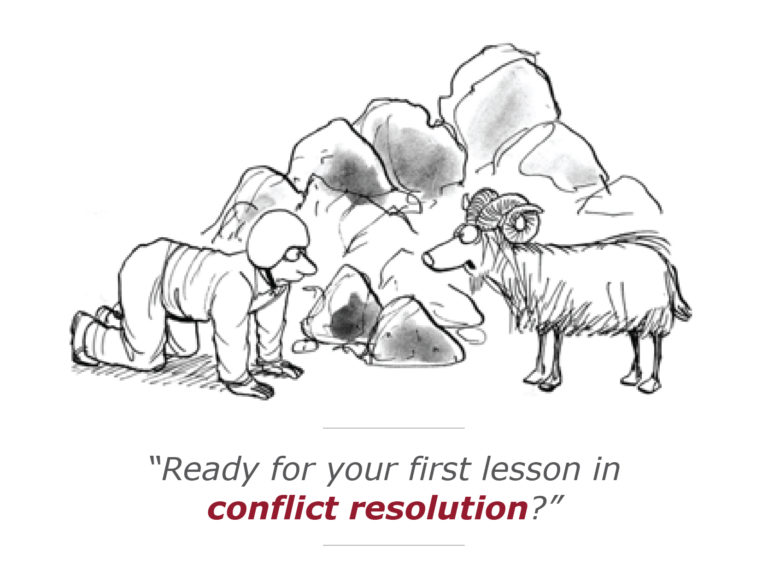
Have you ever had an employee who felt entitled to a promotion just for showing up to work? Have you ever had a boss who yelled at people? Have you ever had a coworker who filed so many grievances that you did everything to avoid interacting with them? I’ve been interested in what makes people feel victimized, powerless and disengaged since my undergraduate days and, although I don’t claim to have all the answers, I’ve learned a few things along the way that have helped my clients (and me!) to shift the outcomes in these kinds of situations. We don’t have to go the way of the ram! You’re not alone We can never have control over another. However, we can influence others. These sticky situations are more common than any of us would like to believe and I don’t think our world will ever be devoid of them, so we might as well have some coping mechanisms. The title of this article might lead you to think that I believe the problem is all with the other party. But that’s not the case. A mentor of mine once said: “If you are the one who is suffering, you are the one who has the problem.” It’s not that the other person has no responsibility; of course they do. But the bottom line is, we only have control over our own thoughts and behavior. We can never have control over another but we can influence. All of us get into a victim mindset from time to time. It’s part of the human condition.  The trick is to have awareness when we are falling into a victim mindset and to find a way to shift our thinking so we don’t have to feel powerless any more. Many of you might be thinking: I didn’t start reading this article to change my attitude; I need to change the attitude of the other person! But we can only influence another person when we have self-awareness and are willing to see things from the other person’s perspective. This means taking some time to make sure our own attitudes aren’t part of the problem. Taking a different view leads to options for change The best way to shift how things go with someone you have tagged as “difficult” is to ask yourself a few key questions. For example: Why am I reacting so strongly to this person? When we react strongly to another person’s behavior it’s typically because we perceive the behavior as an attack on our integrity or our values. You might even believe that the person is purposely trying to make your life difficult. If you find yourself having a strong negative reaction to someone, ask yourself why you are reacting that way. Having greater self-awareness about your reaction will give you information on how to influence the situation. What are my assumptions about this person’s motivation? Often, when an employee files a grievance, doesn’t pull their weight, or behaves in ways that cause tension on the team, we feel victimized by that person. It’s a normal reaction. In response, we might choose to avoid the situation, file our own grievance, try to make their lives as miserable as they are making ours, give them a “good talking to”, yell at them, or fire them. There are many alternative ways to respond and having self-awareness will help you to be discerning and wise about what you choose to do. Do I understand the other person’s perspective? Have you taken the time to ask yourself how the other person views you and your part in the situation? Understanding the other person’s perspective can be extremely helpful in coming up with the right solution. Have I tried different approaches to dealing with the situation or do we keep doing the same dance with each other? It’s natural to try approaches that have worked for us in the past. It’s reasonable to believe that those approaches will work in similar situations. The problem is, everyone is not the same.  If you have been trying the same approach over and over again hoping that the other person will respond differently, it’s time to try a new approach! What part did I play in creating the difficulties in this situation? If you want to create change you must be willing to take responsibility for your part in the situation. Your part might be 100%, it might be 10% or anything in between. Whatever it is, own it. I guarantee that nothing will change if you don’t take ownership for your part in the situation.  Maybe it was something you did three years ago that set the two of you off on the wrong foot, or maybe it’s been a pattern in the way you have dealt with this person that has not been effective (yet you have continued with the same approach). Tips for turning things around Own your part in the difficulty by being honest with yourself about your own behavior, assumptions, and non-verbal communication. Set a realistic goal for your next conversation (i.e., rather than saying “this needs to be 100% resolved the next time we talk” set a goal to “have a conversation where no one raises their voice or rolls their eyes”). Work towards mutual understanding vs. winning the argument or getting your way. Get curious. Ask questions with the intent of learning. Be willing to see things from the other person’s perspective. Sticky situations can come up every day. There are plenty of opportunities to practice these new ways of thinking and behaving. Please let me know your thoughts! Gail Finger is an executive coach and facilitator known for her ability to get communication unstuck. She has a proven track record of helping individuals to resolve conflict, getting teams functioning at the highest level, and helping leaders to be able to effectively coach and mentor others and make the hard decisions. Gail can be reached at gail@fingerconsulting.com.

Body Language Matters!

finger consulting Body Language Matters

Most of us have had the experience of thinking we clearly communicated our ideas, only to find out later that we were completely misunderstood. Why does this happen and what can we do to prevent it? THE PROBLEM Nine times out of ten, miscommunication occurs because our non-verbal message doesn’t match our words. We have said the words we want the other person to hear, but our tone of voice and body language don’t match the words. There have been many studies on how much of our communication is verbal vs. non-verbal. Most experts agree that 55% of what we communicate is body language, 38% tone of voice, and only 7% the words. That’s not to say that if you are making a presentation in front of an audience your words matter less than your body language. Of course our words matter! However, what the studies do show is that if there is a disconnect between your words and your non-verbal communication, the other person will hear your non-verbal message over your words. When you’ve been in conflict or had numerous disagreements with another person, you will not be able to get to a place of mutual understanding if your non-verbal communication doesn’t match your words. This is because the truth of how we’re really feeling always comes out in the non-verbal part of communication! SO, WHY NOT JUST KEEP A POKER FACE? We have all met people who are very skilled at keeping a “poker face” If you are one of those people, you might believe that this is helping others to focus only on your words. But this is not true! Human beings are complex, and we are always looking for the full “gestalt.” If we don’t get the full picture from the other person (both verbal and non-verbal), we will finish the gestalt ourselves. GESTALT PSYCHOLOGY IN A NUTSHELL Gestalt psychology theory proposes that what is ‘seen’ is what appears to the seer and not what may ‘actually be there.’ Gestalt psychology also proposes that the nature of a unified whole is not understood by analyzing its parts. Learning is thought to be a process of reorganizing a whole situation, often involving insight as a critical factor. This is in stark contrast to the behavioral psychology view that learning consists of associations between stimuli and responses. Gestalt experiments show that the brain does not act like a sponge (i.e., a passive receiver of information) but instead actively filters, structures, and matches all incoming information against known patterns to try to make sense of it. WHY SHOULD YOU CARE? If you want to increase your chances of being understood by another person, your non-verbal communication must match your words. Keeping a poker face won’t achieve that goal. The other person will take the tiniest non-verbal cue and make assumptions about the intent or emotion behind it. If you don’t want the other person to make assumptions about what you’re really thinking or feeling, you have to give them the whole picture yourself. Remember, if the words and non-verbals don’t match, the other person will believe the non-verbals. If you have a poker face, the person will go into their past experiences and try to make sense of your neutral expression. Depending on their past experience, they might conclude that you’re angry with them, that you don’t care about what they’re saying, or that you’re completely disengaged from the conversation. SO, WHAT DO I DO IF I’M FRUSTRATED BUT DON’T WANT TO SHOW IT? There are many situations in the workplace (and in life!) where we may not want to show our true feelings. The problem is, feelings always shine through! If you don’t want to show your frustration you must find a way to work through it so that the primary emotion you are actually feeling in the conversation is something positive. Studies show that if there is a disconnect between your words and your non-verbal communication, the other person will hear your non-verbal message over your words. It takes a clear intention and a good dose of self-awareness to do this. Think about the best boss you ever had. Did that person always show their frustration, or did they carefully choose the moments where they would demonstrate their frustration? How did that person influence you? What made you want to follow them? I would venture a guess that the best boss you ever had was a good communicator. You trusted that what they said is what they meant. And, even if you didn’t know it at the time, that happened because their non-verbal communication matched their words. When you’re frustrated or angry with another person, the trick is to shift your internal mindset about the situation vs. trying to mask your feelings. Masking your feelings never works. The other person will see right through it. If you want to be understood by the other person, you have to be willing to understand them and their point of view first. If you go into each and every conversation with the belief that all perspectives are valid and that you might have something to learn from the other person, you will not be feeling angry and frustrated during the conversation. You will automatically have an open posture. This open posture has the potential to influence the other party in a positive way. If, on the other hand, you say “I respect your views,” but in your mind you are actually thinking “This person is an idiot,” what message do you think that person will actually receive? TIPS FOR ENSURING THAT YOUR NON-VERBAL COMMUNICATION MATCHES YOUR WORD 1. Empathy and Compassion Having empathy and compassion for people we have had ongoing conflicts with, or who we have decided we just don’t like, is no easy task. However, it’s crucial to changing the dynamic between the two of you into a positive working relationship. It’s one of the best ways to ensure that your words and non-verbal communication match. The first step towards having empathy and … Read more

If You Think Interpersonal Dynamics Don’t Affect the Bottom Line, Think Again

fingerconsulting-If-you-think-interpersonal-dynamics-dont-affect-the-bottom-line-think-again

Most of us, at one time or another, have made judgments like these about a co-worker: “He’s so overbearing,” “She doesn’t listen,” “He avoids conflict,” or “She wants to take all the glory.” Usually, these judgments occur because we have different communication preferences or because we have made assumptions about the other person’s motives. Sometimes people really do behave badly. If we were honest with ourselves, we would have to admit that there were times when we were the ones behaving badly. We’re all human and we all make mistakes. The real problems with workplace relationships occur when: There is no self-awareness of how our behavior is affecting others. That is everyone’s personal responsibility. We are afraid to give (or receive) feedback, so the behaviors continue. There is joint responsibility here – personal and organizational. Good interpersonal communication skills are not rewarded or acknowledged in the same way that technical skills are. This is the organization’s responsibility. 70% of small to mid-size businesses claim that ineffective communication is their primary problem. Regardless of the origin of these judgment or the reasons for ongoing challenges with interpersonal dynamics in your company, it affects employees’ ability to work collaboratively together. And that affects the bottom line. When we hold these kinds of judgments about our coworkers, we are less likely to want to interact with them. Then, when we do have to interact with them, we will tend to go into the conversation assuming that the other person will behave badly. So, in this situation, we either avoid the person completely or get ready for a fight before the conversation has even started. It’s quite telling that 70% of small to mid-size businesses claim that ineffective communication is their primary problem (Source: SIS International Research). Organizations need people to work cooperatively and collaboratively with one other. When they do, productivity is higher, innovation increases, and employees are much more likely to refer their talented friends and colleagues into the company. When there are a lot of, shall we say, “personality conflicts” that cause unhealthy defensiveness and lack of communication in an organization, these things suffer. When even one employee has poor interpersonal skills, it can affect the entire team, department, or division. It can also definitely affect the bottom line. If you don’t believe me yet, see if any of these common scenarios have ever occurred in your company: One person keeps information from others after having the experience of a co-worker taking credit for their work. The information that is being withheld is needed by everyone in order for the team to be efficient. Time is then wasted because this conflict was never resolved. A manager is known for yelling at employees in front of others. No one addresses the situation. Team members are afraid to have an opinion, be creative, or bring a problem to the manager. Systems start to fail. All of this could have been avoided if the manager’s interpersonal behavior had been addressed. An employee continually blames others for their mistakes. This has caused so much strife on the team that no one wants to work with that employee. The employee’s behavior is never addressed, so the rest of team finds a workaround: to avoid working with the employee, they do his work for him. The result is a completely unproductive team member who is still earning a full-time salary. As mentioned earlier, sometimes people don’t see how their behavior affects others. It might also be true that they just don’t know how to behave in a more positive manner. So what’s the cure? Provide Awareness: First and foremost, don’t be afraid to give feedback if you notice an employee’s communication is not being received properly or that they are avoiding communicating with others on their team. The organization can (and should) create a feedback culture where leaders lead by example. Mentor and Coach: In many cases, these situations occur because of a lack of experience or simply not having the necessary skills on one’s toolkit. Experienced supervisors and managers can provide guidance to young (or not so young) employees on what kinds of communication strategies will work in the situations they are facing. Train: Create a culture where the company shows that it values good interpersonal communication. Provide a series of training programs where employees can practice new skills in between sessions and debrief how things went during the next class. This does not have to be expensive. A lunch and learn series, or a few half-day workshops over the course of a year, can do the trick. Make Interpersonal Communication Part of Every Performance Feedback Conversation: During your regular one-on-one meetings with your employees, ask them about their successes involving influencing another person or collaborating on a team. Ask if they are running into any challenges and then offer your guidance and support. When even one employee has poor interpersonal skills, it can effect the entire team, department or division. If employees understand that management cares about workplace relationships, and that the company notices when an employee is making an effort to improve interpersonal communication, they will be much more likely to put more time and effort into improving their interpersonal relationships. If it’s never brought up by their supervisor, they will assume it’s not important and will be much less likely to put in the time and effort. Companies that make interpersonal dynamics a priority in their organizations reap the rewards. When your teams are more productive, it will promote a high level of “happiness” at work, you will retain your best and brightest, and your organization will gain a reputation of being a fantastic place to work. Doesn’t that sound like a great outcome? Call us today to find out how we can help to improve interpersonal dynamics in your organization so that you can focus on moving your business forward. Gail Finger is an executive coach and facilitator known for her ability to get communication unstuck. She has a proven track record of helping individuals to … Read more